Winning Back Spare Parts Revenue Starts with Better Part Identification
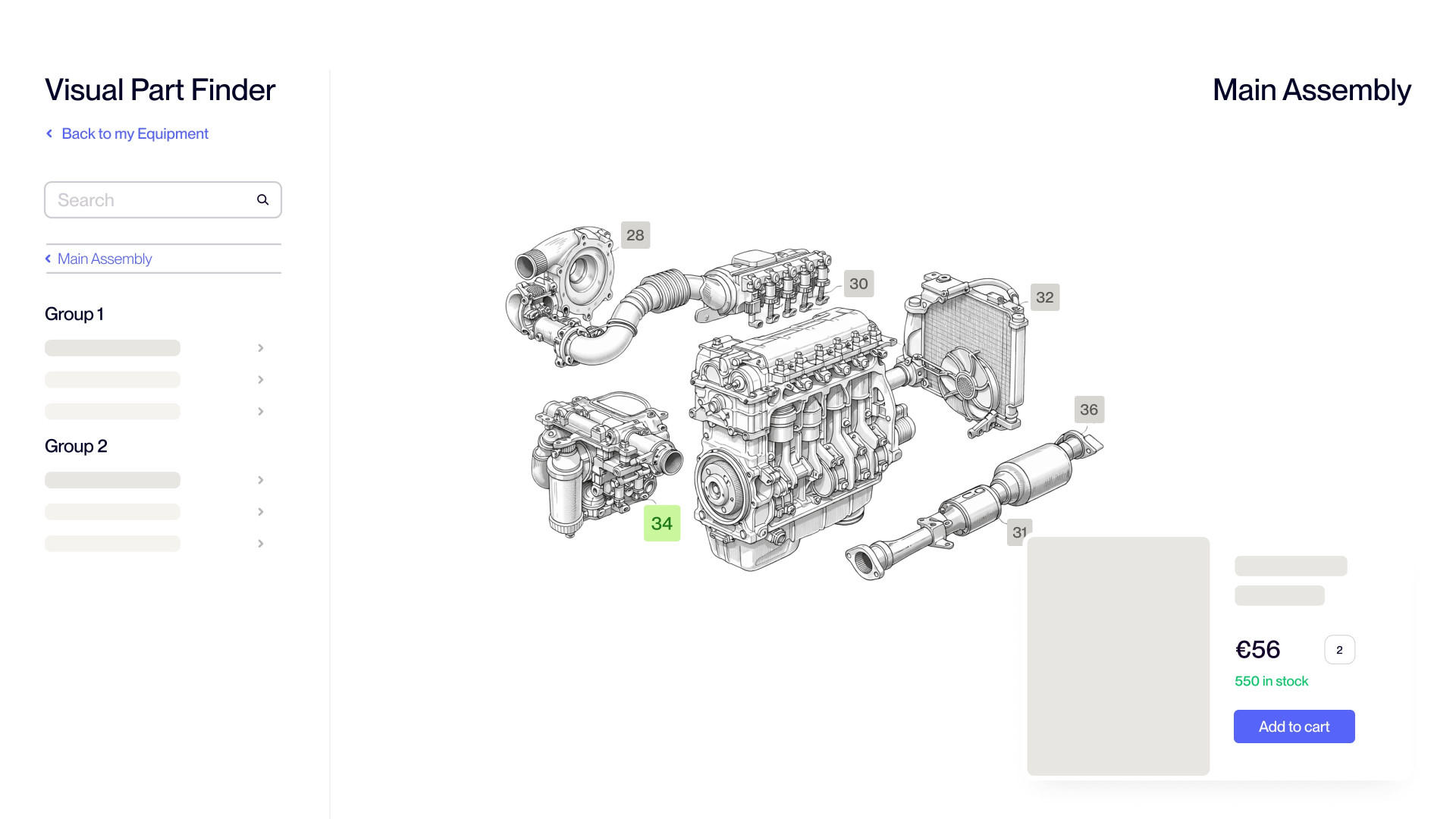
71% of today’s industrial buyers are Millennials or Gen Z, and nearly three-quarters prefer to order online through a supplier’s website or portal. They expect real-time stock visibility, accurate delivery dates, and the kind of self-service experience they’re used to everywhere else in their lives.
When they can’t find what they need? They don’t call. They don’t wait. They go somewhere else.
Our 2026 whitepaper with Copperberg lays out this challenge clearly. And one of its core arguments is worth paying close attention to: the grey market isn’t an unstoppable force. It’s a symptom of digital gaps that can be closed.
This blog looks at where those gaps are the widest, and how with our improved Visual Part Finder, OEMs can feel empowered to close them.

The problem:
when finding the right part feels harder than it should
Let’s start with what the data tells us.
85% of B2B buyers reported frustration when ordering parts online, and 75% said they’d switch suppliers for a better experience.
Here are some of the most common causes of those searches:
Searches that lead nowhere
Spare part identification is uniquely difficult. Unlike consumer products where a close substitute will do, industrial parts require exact matches. A buyer searching for “cylinder” might get 900 results but still can’t find the one part that fits their specific machine configuration. When search tools fail to surface the right part number, buyers lose confidence, and manufacturers lose orders.
Manual fallbacks that slow everything down
Too many manufacturers still rely on email-based quoting, manual order entry, and legacy workflows that force buyers to double-check information. In many cases, frustrated buyers end up sending photos of parts without proper context to their sales rep, hoping someone can identify what they need. Support staff then have to piece together which machine the part belongs to based on vague descriptions. This creates a dependency on support teams and slows the entire ordering process.
Data that doesn’t match reality
Disconnected systems — ERP, CRM, PIM, and other tools that don’t update in real time — lead to discrepancies in pricing, inventory, and lead times. As elaborated in our whitepaper, the moment a buyer spots conflicting data, confidence takes a hit. And in B2B, trust is everything.
The underlying issue isn’t a lack of product knowledge or weak customer relationships. OEMs already have those strengths. The challenge, as the whitepaper makes clear, is connecting those assets in real time and making them visible to the buyer at the point of decision.
The solution:
Visual Part Finder
This is exactly the gap Visual Part Finder is designed to close.
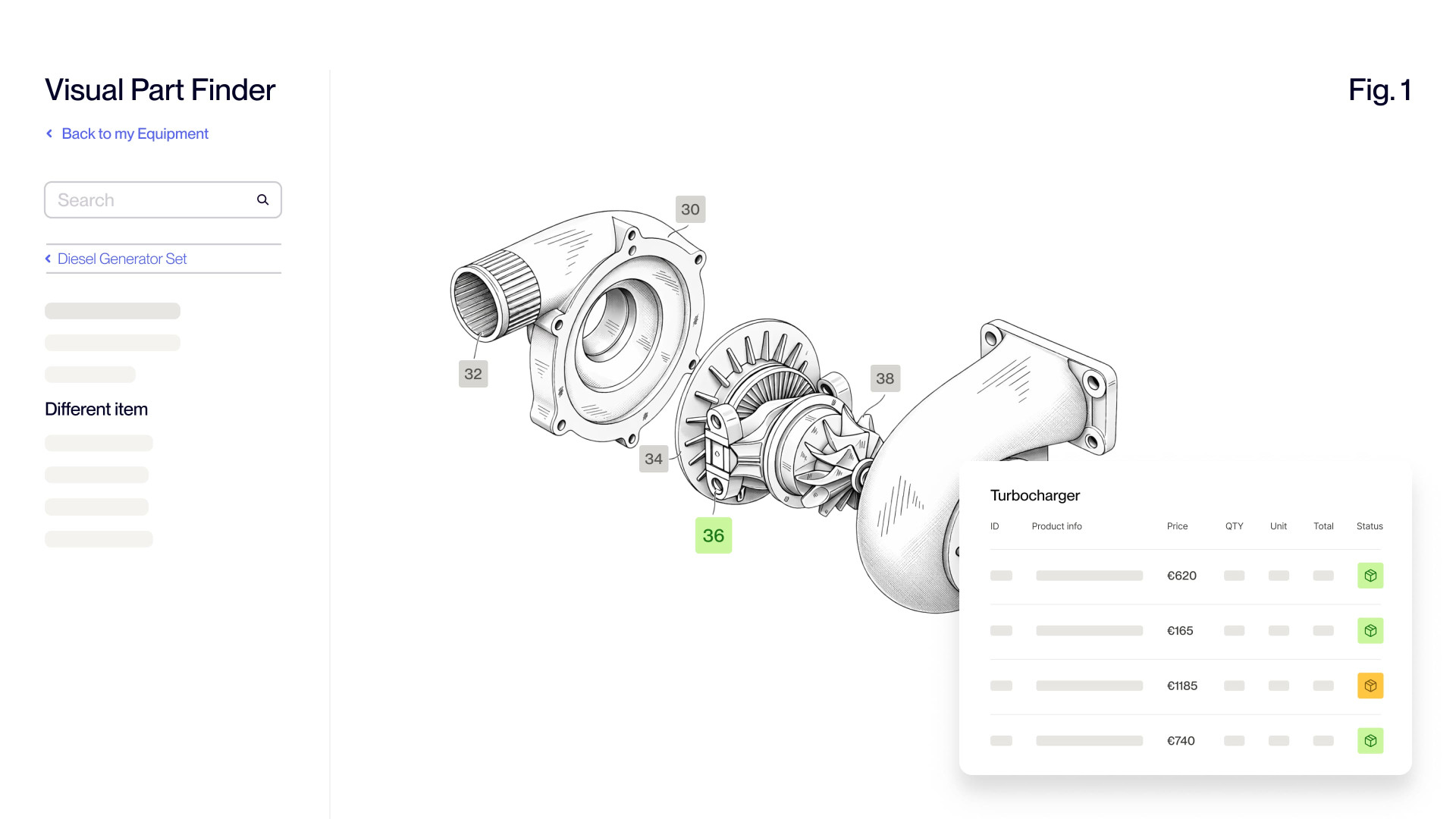
Visual Part Finder transforms complex spare part identification into a reliable, self-service digital experience, right inside your webstore. By combining structured equipment navigation with interactive exploded views, it gives buyers a clear, guided path to purchase.
Here’s how it addresses the challenges we’ve outlined:
Confident product discovery
The Visual Part Finder lets buyers navigate through their specific equipment structure, searching serial number, drilling down through assemblies and components, and arriving at the exact part they need. Interactive exploded views with clickable hotspots allow them to visually confirm their selection before adding it to the cart. This eliminates the problem of guesswork, and bolsters buyer confidence.
Genuine self-service
The best portals support B2B buyers’ need to manage orders independently. Visual Part Finder delivers on exactly this. Buyers move smoothly from identification to purchase without needing to call, email, or send photos of part to a rep. This frees up your support teams to focus on higher-value activities, while giving buyers the speed and autonomy they demand.
Eliminate order errors
Every order is an investment in uptime. Visual Part Finder supports that by building visual validation into the buying journey. Buyers see the part in context within an exploded diagram, confirm it’s the correct component, and proceed to checkout with full confidence. The result? Fewer returns, fewer disputes, and a stronger sense of partnership between buyer and OEM.
AI-assisted efficiency
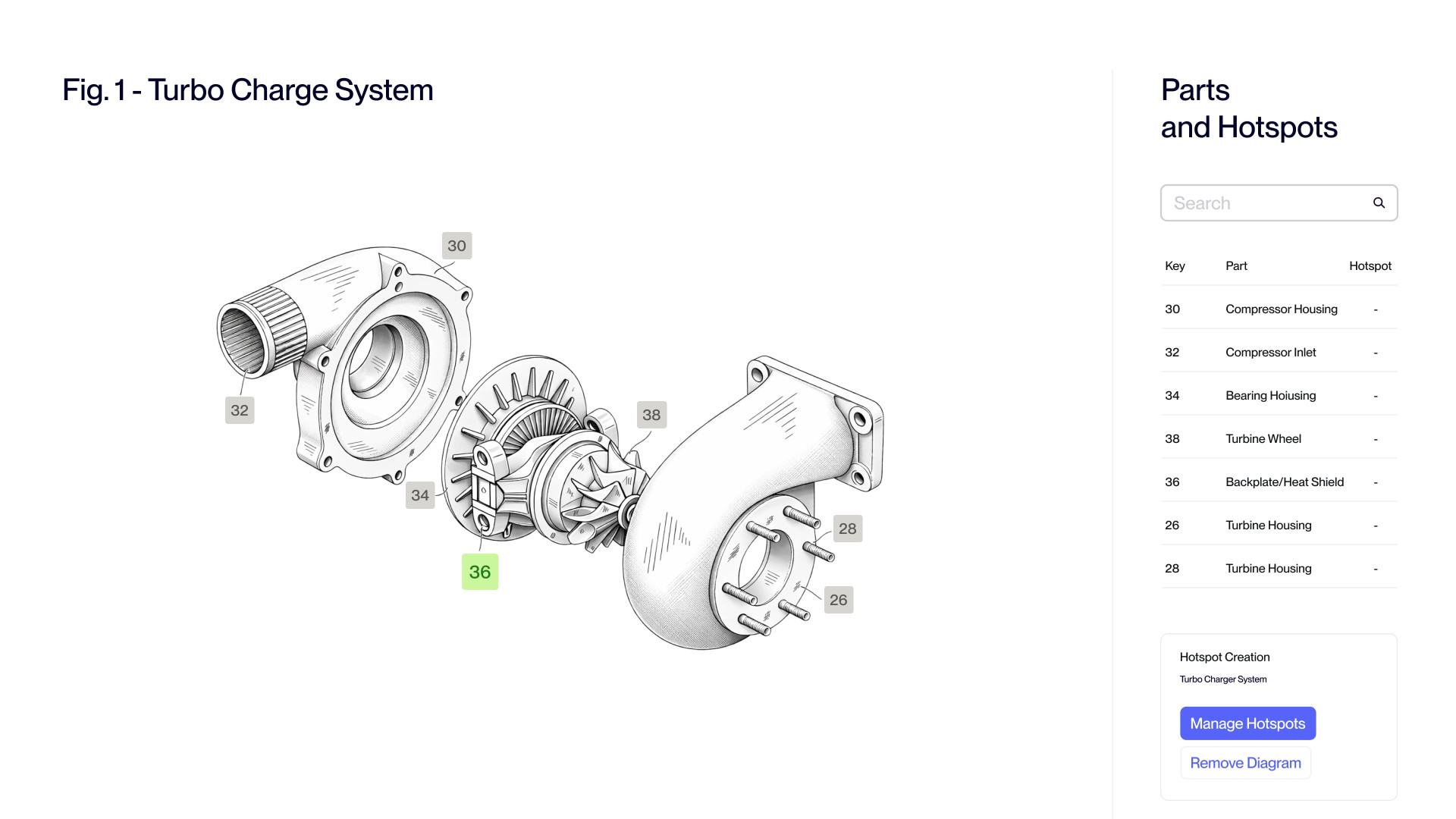
AI-assisted hotspot detection helps you build and maintain interactive exploded views faster, reducing the manual configuration work that typically makes these tools hard to scale. Upload your equipment data, import your diagrams, and let the tool do much of the heavy lifting. This means you can offer the visual spare part experience your buyers want without dramatically increasing your operational load.
How the Visual Part Finder
can help grow your business
Our whitepaper outlines three business outcomes that matter most for manufacturers investing in their digital aftermarket channels: revenue growth, customer retention, and strategic advantage.
The Visual Part Finder contributes to all three:
Revenue growth
Guided, visual part discovery means more searches convert to completed online orders. When buyers can find and verify the right part themselves, fewer transactions leak to offline channels or grey market sellers.
Customer retention
Visual confirmation and equipment-specific navigation build the kind of trust that keeps buyers coming back. When the experience is accurate and reliable, there’s no reason to look elsewhere.
Strategic advantage
Offering interactive exploded views and structured equipment catalogs signals to buyers that you’re invested in making their job easier, and positioning you as a modern, dependable partner.
The bottom line
The aftermarket is changing. Buyers are younger, more digitally fluent, and less patient with clunky experiences. The grey market grows in the gaps where OEMs fall short.
There’s an opportunity to take this common blindspot and use it to start giving buyers the accurate, transparent self-service experience they expect. With our Visual Part Finder, providing this experience becomes easier than ever.