Is the construction industry ready to go fully digital? Here's what's next

Imagine this: within the next few years, your competitors might be conducting 100% of their sales online. Surprising? Perhaps. But according to recent data, an astonishing 84% of construction suppliers predict exactly that future. Construction has long relied on traditional face-to-face interactions and manual processes—but that's rapidly changing. Today's market is evolving, and the need to adapt digitally has become urgent
So what does this transformation look like for the construction industry? What are the challenges that e-commerce in construction faces? Take a deeper look at the digital shift within the construction industry.
Digital transformation:
The numbers tell the story
Digital transformation:
The numbers tell the story

84% of construction suppliers anticipate moving all their sales online eventually, highlighting an inevitable digital future.

75% of construction professionals are significantly increasing investments in digital transformation to stay competitive

The global construction materials market is projected to reach $2 trillion by 2034, creating massive online revenue opportunities.
Why focus on e-commerce in construction?
$2 trillion. That’s the projected value of the global construction materials market by 2034. And an online sales channel can help you capitalize on a bigger share of those profits. Bonus: The right e-commerce solution can also help you adapt more gracefully to disruption moving forward. Plus, it’s what your customers want and expect from you.
If you’re not selling any of your products online yet, it may be time to get started with B2B e-commerce. When you do, you're going to realize even more business opportunities than just an uptick in revenue from your online channel. Our research shows that these opportunities include expansion into direct-to-consumer (D2C) sales and more.
Boosting efficiency using smart automation and e-commerce: it’s within reach for companies in the construction industry (in fact, see how IHL Canada did it). But achieving this goal isn’t without its challenges, especially now.

Regional trends in construction e-commerce: North America vs Europe
The United States’ B2B e-commerce market is growing rapidly – U.S. B2B online sales approached €2 trillion in 2023 (over $2.1 trillion), which is more than double the 2019 level.
Europe is on track to reach about $1.8 trillion in B2B e-commerce sales by 2025.
Major European economies (e.g. the UK, Germany, France) are heavily investing in digital sales channels for construction and industrial goods. The distinct difference in Europe is the diversity of markets – selling across borders means dealing with multiple languages, currencies, and regulations, which historically slowed unified e-commerce adoption.
Learn more about how to scale your global e-commerce sales.
What are the challenges associated
with digitization in the sector?
What are the challenges associated
with digitization in the sector?
As early as 2019, 70% of companies in the industry believed those not adopting digital ways of working would go out of business, while another 60% agreed the sector was already behind others in adopting digital technology.
By 2021, 3 in 4 construction companies were forced to increase their investment in digital transformation because of COVID-19 disruption. Now there's another problem; they're also lagging behind in customer experience.
- 43% even rank their supplier relationships among their top CX challenges.
- 80% consider them so important that they would buy from a supplier they had a strong relationship with, even if it meant less favorable business terms
- The biggest issues identified were usability and misinformation challenges, including lack of data, inaccurate data, and overly complicated re-ordering and checkout processes.
- Buyers’ challenges with delivery and tracking, as well as payment terms, were more pervasive than in any other industry (including food and beverage, electronics, medical supplies, etc.).
“Failed [digital transformation] projects can cost an average of $655,000 to the bottom line, yet despite this, almost all (86%) construction organizations overlook the importance of a good technology partner as an enabler of an effective digital transformation.”With that in mind, be sure to approach your digital and e-commerce projects in a smart way, with both your choice of partner and the online customer experience top of mind.
The top 3 B2B requirements for e-commerce in construction and building materials
The top 3 B2B requirements for e-commerce in construction and building materials
When it comes to e-commerce in construction, your customers know exactly what they want. And we have those insights. In our own research , we asked respondents which e-commerce solution characteristics were most important for them. We found that this aspirational e-commerce wishlist aligns with the challenges these businesses are facing; they want a solution to their data problem so they can leverage e-commerce hassle-free and:

Real-time inventory updates

Better search functionality

Improved product filtering options
This emphasis on accurate data and saving time makes sense with the current growth the construction sector is experiencing. A B2B web store can provide the level of automation necessary to achieve these goals, but only if it fits in well with the rest of the construction company’s IT landscape. Effective integration between the ERP and the web store is particularly important.

Drawing a line between construction e-commerce and digital maturity
Research by the Boston Consulting Group highlights this correlation and found that there are three distinct phases of maturity, but notes that it is primarily distributors in the construction sector who are achieving an advanced stage of digital maturity:
While most organizations in the industry are in early or middle stages, many distributors sit in the advanced stage of digital maturity. It’s possible that the urgency around embracing innovation for distributors lies in the cross-industry shift toward direct-to-consumer sales. Perhaps, with a threat to their livelihood as manufacturers and wholesalers sell to consumers, distributors are being more quickly pushed to digitize. However, BCG notes, “even digitally advanced companies in the construction sector are far from keeping up with organizations in other sectors, such as media and retail.”

According to Deloitte, the opportunity in embracing a mature digital approach is the ability to use that to transform your business, even after you’ve perhaps launched and optimized a web store. In fact, it’s even made Building Information Management (BIM) go from a nice-to-have for on-site productivity to a digital model sitting at the core of organizations’ digitization plans: one that building materials businesses will increasingly rely on to succeed. BIM adoption has grown 4x in the last decade.
“The greater opportunity is not to merely improve existing building processes, but to explore new and radically different approaches to building as an activity. Rather than simply digitizing existing building practices—swapping analog measures and tasks for digital ones to make them more precise and effective—we need to digitalize building by shifting the foundation of our operating model to a wholly different premise.”
Construction e-commerce: Stories from the real world
Companies like Palfinger and Harrison & Clough have shown that with the right platform, construction e-commerce is a path to high adoption, improved customer satisfaction, reduced manual workload, and revenue growth. Their stories are a testament to the fact that an e-commerce solution built for B2B complexity can transform results:

Palfinger's digital leap
When Palfinger, a global lifting solutions provider, embraced a specialized e-commerce platform, their results were dramatic:
- Customer satisfaction surged to 85% following the implementation of their new online ordering system.
- A 200% increase in user accounts expanded their market reach significantly.
- Administrative tasks were streamlined, freeing sales teams to focus on high-value activities.
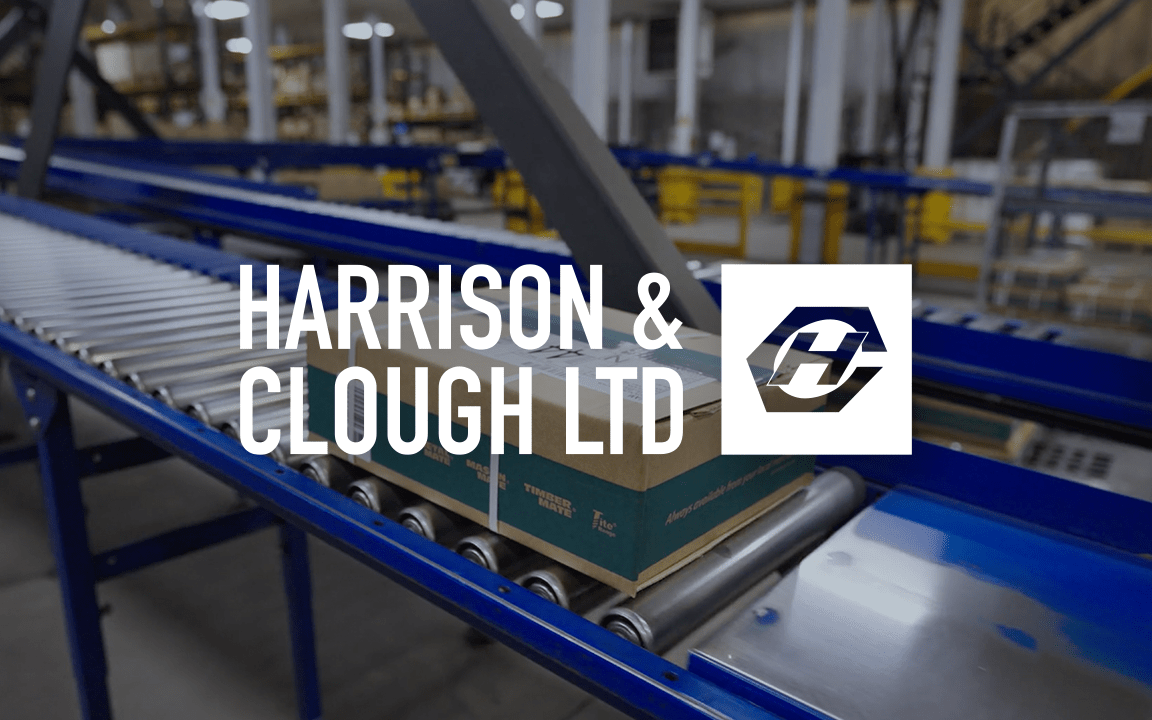
Harrison & Clough's efficiency boost
UK-based distributor Harrison & Clough's digital transformation yielded impressive outcomes:
- An 80% reduction in customer service calls, thanks to enhanced online self-service tools.
- Automation eliminated repetitive manual tasks, significantly saving resources.
- Real-time data integration boosted internal confidence and greatly improved customer interactions.
Is your business ready to build its' digital future?
Is your business ready to build its' digital future?
Download our 2025 B2B Buyer Report today to stay ahead of the curve.

![[Trends 2022] New rules for B2B buying - Featured Resource Image](/sites/default/files/styles/featured_item/public/media_import/Trends-2022-New-rules-for-B2B-buying-Featured-Resource-Image.png?itok=Yk7u1oah)